
Sponsored

Massachusetts - Vehicle to X Program

tearitupsports

Well-known member
First Name
Russell
Joined
Jun 1, 2024
Threads
8
Messages
336
Reaction score
320
Location
Houston, TX
Vehicles
2023 F-150 Lightning Lariat ER
Occupation
Industrial Automation & Controls
Our deployment is using the Ford Home Integration System (HIS). Is that what you have?
It sounds like the HIS is the limiting factor.
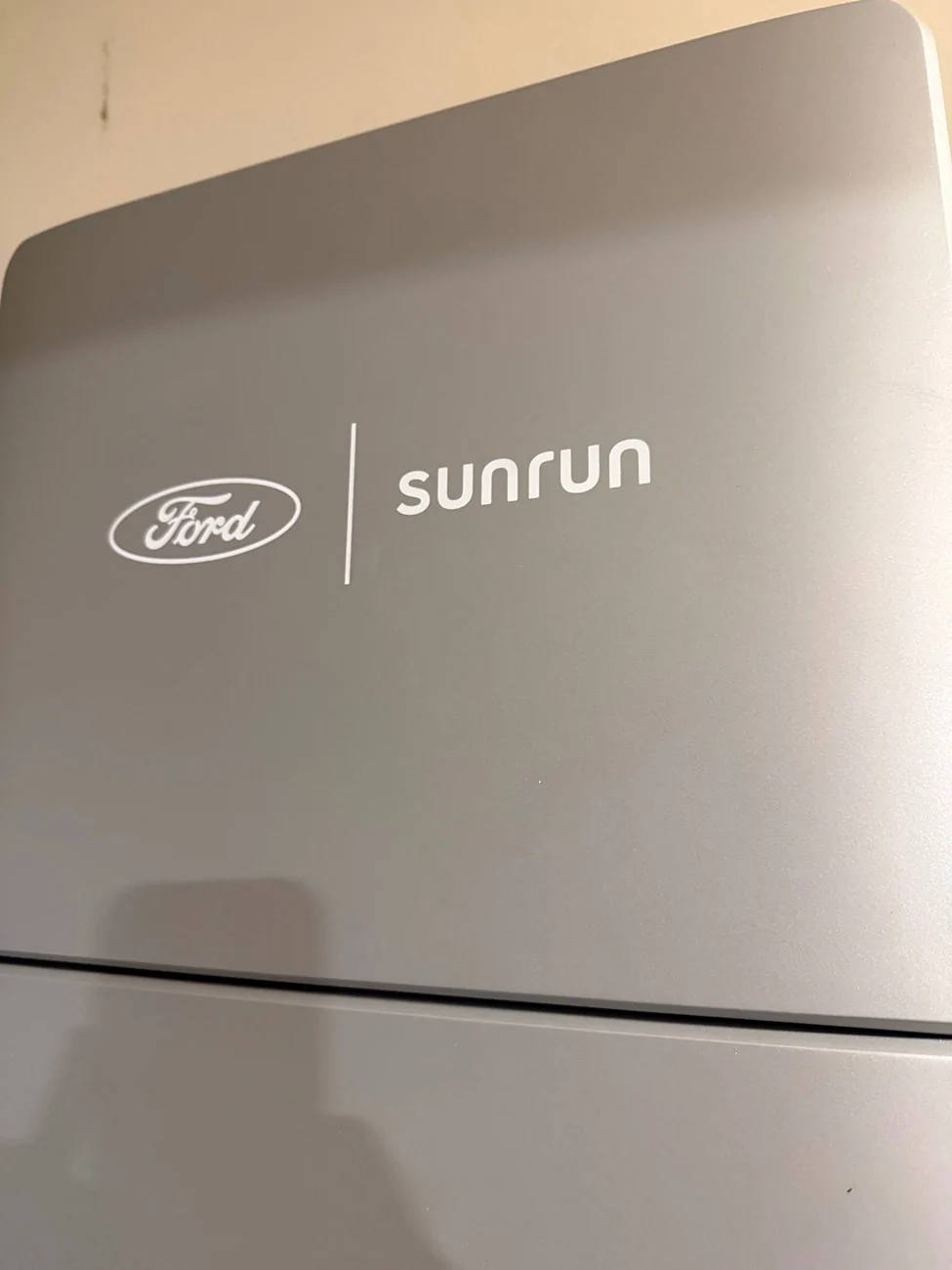
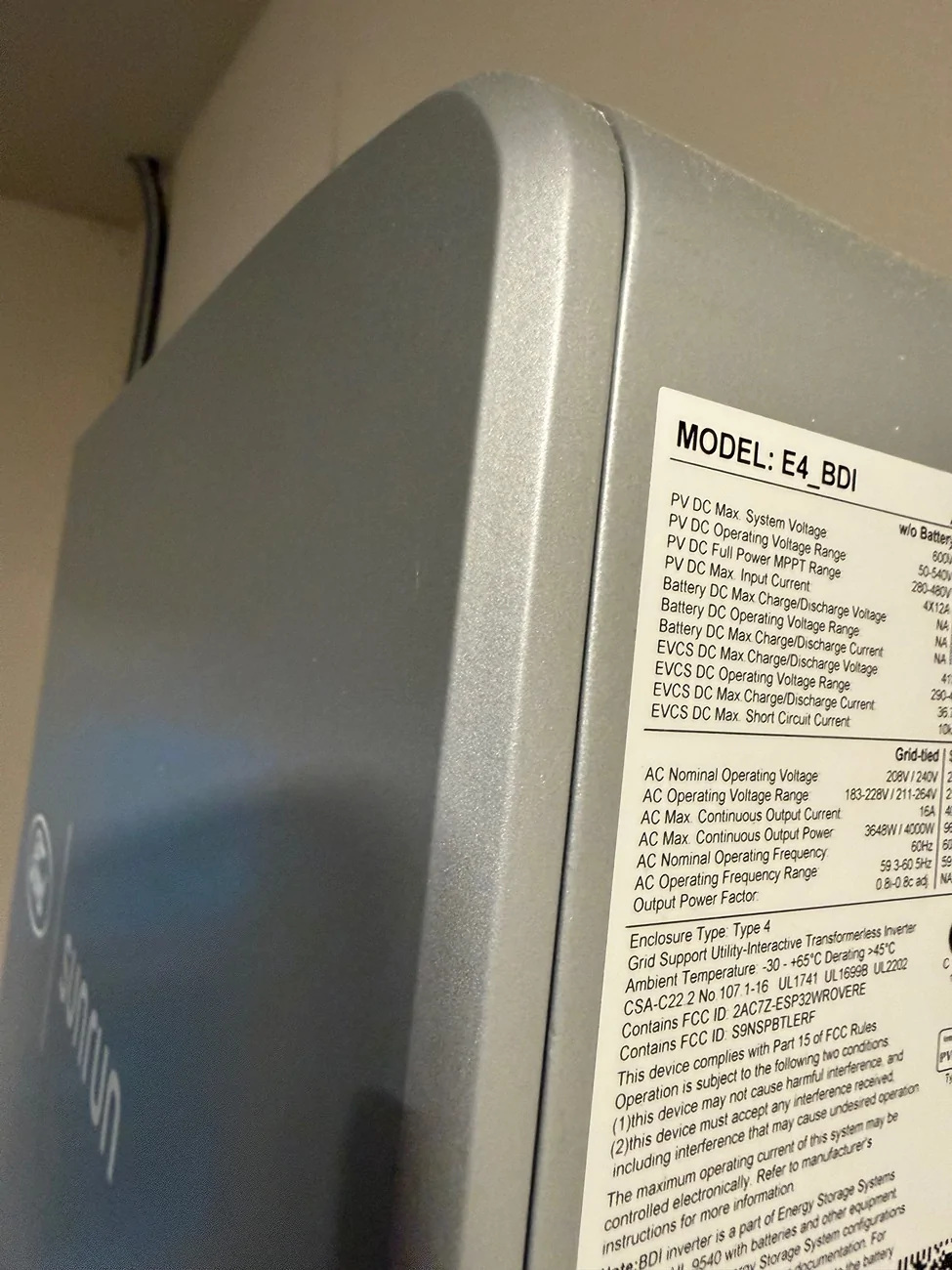
The Delta Ex_BDI is the Ford inverter. There is no limitation in the HIS. Sunrun is just giving you the wrong info.

Ford F-150 Lightning Massachusetts - Vehicle to X Program IMG_2653
Ford F-150 Lightning Massachusetts - Vehicle to X Program IMG_2654
Sponsored

 
Last edited:

JvdMaat

Well-known member
Joined
Jan 21, 2025
Threads
1
Messages
100
Reaction score
83
Location
W. Mass
Vehicles
2023 F150 Lightning
We (people with solar panels) had a meeting with the program yesterday. The big takeaways were:
- There's no net metering. AT ALL (ie, you will NOT be paid for ANY electricity you feed to the grid.)
- There is no TOU rates (unless your current provider already has those for you).
- The only compensation for feeding to the grid is at the end of the season at a rate of $275 * (average kW sent to grid over the 30-60 events). So in the case of our Lightnings, this maxes out at 275*9.6=$2,640 for the 2026 season. But if you miss an event (you were out), or joined late (event started at 5, and you didn't plug in till 6), those lower your average by getting 0 for those times. (Discharge rates get reported in 15 minute intervals)

For solar people, there's no more net metering on any solar we feed to the grid. (The technical reason behind this is that net metering is for renewable energy. And the minute you add the truck, they can't certify what generated the electricity fed to the grid (could be from a public charger.))

So you could be "earning" up to $2640 per season. But you do not get paid for the electricity fed to the grid for V2G (At an average of 45 events, at 3 hours each, that's 45*3h*9.6kW=1296kWh (and we're all paying over 30 cents, so that's anywhere from $388-$453). (And yes, that's a cost, not a loss, as after the discharge event, we need to recharge the truck back up with 1296kWh from the grid).
So the yearly profit is a potential of around $2000. Give or take. (The more events, the less profitable, as it measures in kW, not kWh). But still a good deal for us getting the equipment for free. Future participants needing to pay for the gear will have to figure out their break even point. That could potentially be 10 years down the line

Having said all that, it isn't completely bleak for solar users since we're Lightning owners, and Ford partners with Sunrun (I know many don't agree with this, but the Kia and Nissan chargers do not support this, so we're "lucky"). Sunrun can provide (as @tearitupsports showed) a system that supports the EV, batteries, and solar in their microgrid controller. So I'm working on getting a quote for batteries as part of this.
And the goal will be to charge the batteries from the solar, and drain the batteries as much as possible overnight to be able to receive solar power again the next day. (Since any solar fed to the grid is "wasted" (it's used by others (so it doesn't actually go to waste), but not compensated to us)). If I can retain all my solar production internally, that'll be similar to net metering.

And then the new batteries can separately apply for ConnectedSolutions (as some of you already have batteries that do this), and we still get some benefit from our solar panels. (At the same $275 per kW discharge rate to the grid. With the advantage they're always online, so no missed events). And EV and batteries will be discharging simultaneously during the events.

When you stop net metering solar, you do get paid for having solar feed to the grid, but it sounds like it's a monthly flat fee of $2.60 per kW (system size). So while not nothing, it doesn't cover the potential electricity fed to the grid.

Hope that answers a bunch of questions.
 
OP
OP

Howard_Scott_Warshaw

Well-known member
Joined
Feb 14, 2023
Threads
7
Messages
253
Reaction score
361
Location
USA
Vehicles
2022 Lariat ER, rapid red
We (people with solar panels) had a meeting with the program yesterday. The big takeaways were:
- There's no net metering. AT ALL (ie, you will NOT be paid for ANY electricity you feed to the grid.)
- There is no TOU rates (unless your current provider already has those for you).
- The only compensation for feeding to the grid is at the end of the season at a rate of $275 * (average kW sent to grid over the 30-60 events). So in the case of our Lightnings, this maxes out at 275*9.6=$2,640 for the 2026 season. But if you miss an event (you were out), or joined late (event started at 5, and you didn't plug in till 6), those lower your average by getting 0 for those times. (Discharge rates get reported in 15 minute intervals)
With the lowest amount of energy possible, I hate this. Net metering is 100% possible with the truck in the equation, it's just the utilities not wanting to implement the hardware.

Put the charger on it's own utility meter and treat it as a quasi new-service. Compare the interval values against each other to know if it's charging with excess PV and when it's discharging. Or just look at when it's discharging and base incentives on that.

It's 100% possible. The hardware exists, but the political will and forward thinking does not.
 

JvdMaat

Well-known member
Joined
Jan 21, 2025
Threads
1
Messages
100
Reaction score
83
Location
W. Mass
Vehicles
2023 F150 Lightning
With the lowest amount of energy possible, I hate this. Net metering is 100% possible with the truck in the equation, it's just the utilities not wanting to implement the hardware.

Put the charger on it's own utility meter and treat it as a quasi new-service. Compare the interval values against each other to know if it's charging with excess PV and when it's discharging. Or just look at when it's discharging and base incentives on that.

It's 100% possible. The hardware exists, but the political will and forward thinking does not.
It's not a hardware issue. It's a compliance issue.
They cannot do net metering on non-renewable energy.
So solar net metering, no problem, it's renewable, generated right inside your home.
But net metering on the EV is a problem. If you charged up at work, that power may only be 80% renewable, and thus not qualify. (Or if you charged up out of state, it may be even less renewable, depending on local state rules)
And even if you make sure to only charge up at 100% renewable sources, there is no way to certify that. It's just your word.
(Even charging up at home, unless you have a 100% renewable provider, basic Eversource electric is only 63% renewable, so not eligible for net metering)
 

sanj

New member
First Name
Sanjay
Joined
Nov 13, 2025
Threads
0
Messages
2
Reaction score
0
Location
Massachusetts
Vehicles
2023 ER
Hey all. Newcomer to the forum, but this appears to be the best place for the MA V2X conversation.

Here’s my current analysis, based on this thread and some side chats.

The programs isn’t a great deal from the standpoint of maximizing local energy usage. The inability to charge the truck with excess solar and feed the house from the truck (except in outages) is lame. The removal of net metering is also lame.

But helping the grid is appealing. And the money probably works out.

So I’ll probably do it.

The big open question is whether the gear that's installed can be made (after the trial) to do what I really want.

And what I really want is:
1. Charge the truck with excess solar during the day.
2. If the truck is full, send excess solar back to the grid (net metering)
3. Use the energy in the truck at night, or when I'm drawing more than the solar can service.

It sounds, based on @tearitupsports's analysis that this can be done.

But is there any information about whether it can be done with the equipment being installed? My concrn is that it'll have locked-down firmware that isn't able to be upgraded.
 

Sponsored

JvdMaat

Well-known member
Joined
Jan 21, 2025
Threads
1
Messages
100
Reaction score
83
Location
W. Mass
Vehicles
2023 F150 Lightning
That's a good question. They already denied me. For this all to work, the solar needs to be connected to their inverter. And they will not convert an existing system. So my solar will be stand alone and not connected. The only option after this program is to see if I can rig the solar panels into their inverter. (Right now I have 2 SolarEdge inverters for 6 and 4 kW each)
I'll be taking to my wife this weekend to decide if we want to continue and lose net metering, or if we should bow out and give someone else a chance.

(The solar will still be connected, and power the house during the day, which would also power the truck if connected. But there'll be no smarts. And no storing power into a battery to discharge at night)
 

JvdMaat

Well-known member
Joined
Jan 21, 2025
Threads
1
Messages
100
Reaction score
83
Location
W. Mass
Vehicles
2023 F150 Lightning
What do you mean that they denied you?
They said they could not integrate my existing solar into the HIS system.
So it would be just like grid energy to the system.
Can't specifically charge batteries off the solar (and not grid) only.
Sponsored


Top